Introduction
The e-commerce industry is evolving faster than ever. Customers expect seamless shopping experiences, personalized product recommendations, faster checkout processes, and convenient payment options. For businesses, meeting these expectations requires more than just an attractive online store.
This is where Shopify is changing e-commerce development.
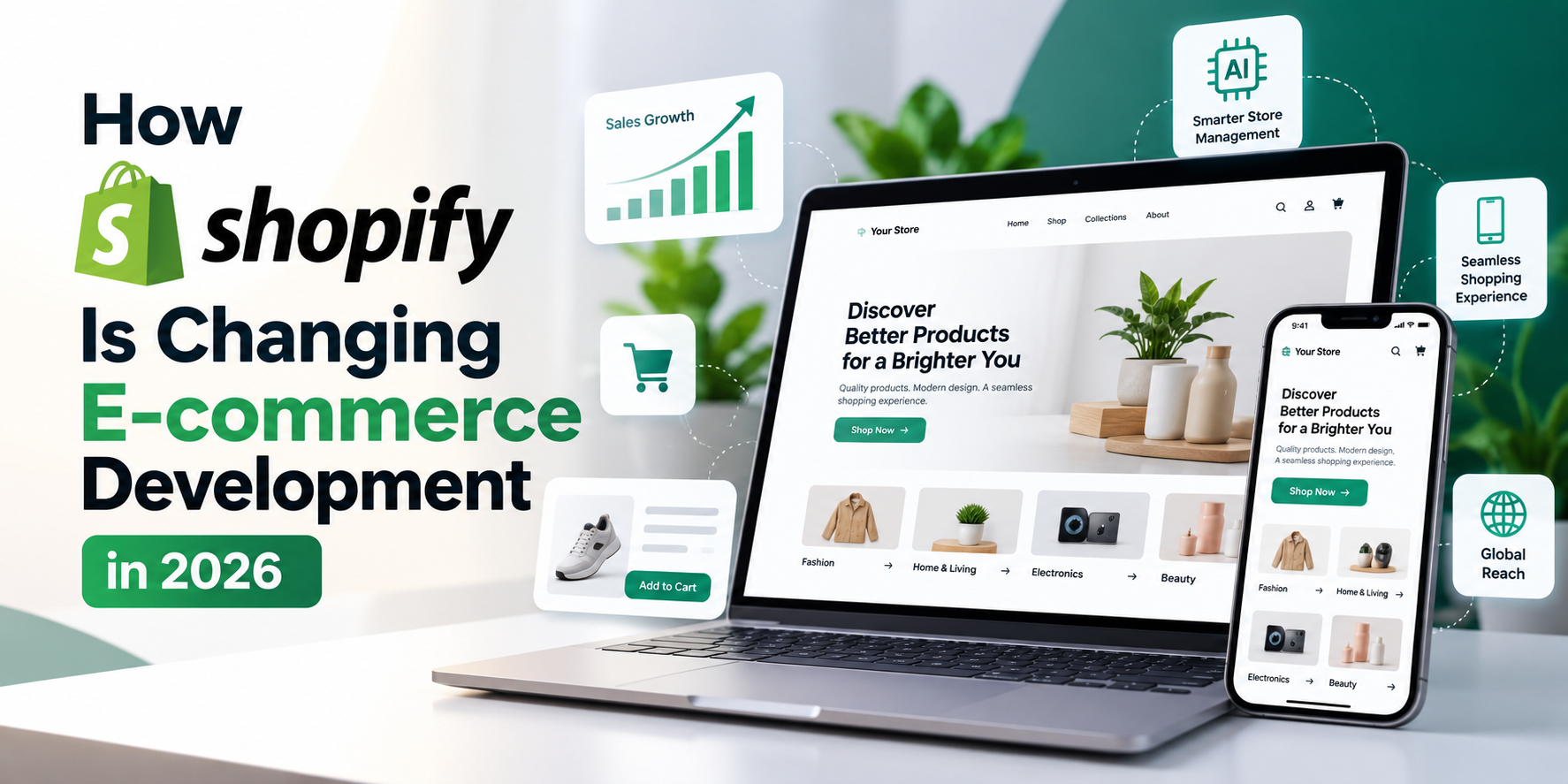
Shopify has evolved from a platform for building online stores into a comprehensive commerce solution that helps businesses launch, manage, optimize, and scale their digital operations. With AI-powered tools, flexible customization, integrated payment solutions, and automation capabilities, Shopify is reshaping how modern e-commerce websites are developed.
At BuzzBandhu, we recognize how these advancements are creating new opportunities for businesses looking to establish a strong online presence and deliver better customer experiences.
Let’s explore the key ways Shopify is transforming e-commerce development in 2026.
1. AI Is Making E-commerce Development Smarter
Artificial intelligence is becoming an important part of modern online retail. Shopify provides AI-powered capabilities through tools such as Shopify Magic and Sidekick, helping merchants simplify everyday tasks and make better use of their store data.
AI can support several areas of e-commerce development, including:
- Generating product descriptions and marketing content.
- Creating and refining product images.
- Supporting store management and business analysis.
- Improving customer support through AI-assisted tools and integrations.
- Helping merchants understand store performance and customer behavior.
These capabilities can reduce repetitive work and allow businesses to focus more on product quality, customer satisfaction, and growth.
Why it matters: Businesses can spend less time on routine tasks and more time improving their products, marketing strategies, and customer relationships.
2. Faster Store Development and Launch
Traditional e-commerce development can require extensive setup, custom coding, and ongoing technical maintenance. Shopify simplifies many of these processes with hosted infrastructure, ready-made themes, apps, and built-in commerce features.
Businesses can use Shopify to create online stores with essential functionality, such as:
- Product catalogs and inventory management.
- Shopping carts and checkout.
- Payment integrations.
- Order management and shipping integrations.
- Discount codes and promotional campaigns.
- Responsive storefront designs.
Developers can customize themes, build custom applications, and integrate third-party systems when a business needs more advanced functionality.
This flexibility makes Shopify suitable for startups launching their first online store as well as established businesses expanding their digital operations.
The result: Businesses can often launch faster while retaining the ability to customize and improve their stores over time.
3. Headless Commerce Is Creating More Design Freedom
One of the most important developments in e-commerce is headless commerce.
In a traditional Shopify store, the storefront and commerce functionality are generally connected through Shopify’s theme architecture. With headless commerce, developers can build a separate frontend while using Shopify to manage products, carts, checkout, and other commerce operations.
For example, developers can use technologies such as React and Next.js with Shopify’s Storefront API to create highly customized shopping experiences.
Headless commerce can provide:
- Greater control over storefront design.
- More flexibility for interactive shopping experiences.
- Opportunities to integrate content and commerce.
- Support for specialized customer journeys.
- Greater control over frontend architecture and performance optimization.
However, headless development also introduces additional complexity, including hosting, caching, integrations, and ongoing maintenance.
It is not necessary for every business. A well-built Shopify theme can be the better choice for many small and medium-sized stores.
4. Personalized Shopping Experiences Are Becoming Essential
Today’s customers want relevant products and convenient shopping experiences. Generic product pages and identical shopping journeys may not be enough to differentiate a brand.
Shopify stores can use customer data, segmentation, apps, and recommendation systems to create more personalized experiences.
Examples include:
- Product recommendations based on browsing or purchase history.
- Targeted email campaigns.
- Customer segments for tailored promotions.
- Personalized product collections.
- Loyalty programs and customer retention campaigns.
When implemented responsibly, these features can help businesses improve product discovery, increase customer engagement, and encourage repeat purchases.
Developers play an important role by integrating the right tools, maintaining website performance, and ensuring that personalization features work smoothly across devices.
5. Mobile Commerce and Checkout Optimization
Mobile devices are central to online shopping. A store that works beautifully on a desktop but performs poorly on a smartphone can lose potential customers.
Shopify supports responsive themes and mobile-friendly checkout experiences. Developers can build on these capabilities by focusing on usability and performance.
Important improvements include:
- Mobile-first layouts.
- Clear product images and descriptions.
- Easy-to-use navigation.
- Fast-loading product pages.
- Simple cart interactions.
- Convenient payment options.
- Fewer unnecessary steps before checkout.
Shop Pay can also help eligible customers complete checkout more quickly using saved information.
A smooth checkout experience reduces friction, although conversion rates also depend on pricing, shipping costs, product availability, and customer trust.
The goal is simple: Make it easy for customers to find a product, understand its value, and complete their purchase.
6. Shopify Is Expanding Omnichannel Commerce
Customers no longer shop through just one channel. They may discover a product on social media, research it on a website, and complete their purchase through an online store or physical location.
Shopify helps businesses connect multiple sales channels through its commerce ecosystem and available integrations.
These channels may include:
- A brand’s online store.
- Social commerce platforms.
- Online marketplaces.
- Physical retail locations using Shopify POS.
- Email and other marketing channels.
Centralized product, inventory, and order management can help businesses coordinate their operations across supported channels.
For example, a fashion retailer can promote products through social media while managing online orders and eligible in-store sales through connected systems.
This creates a more consistent experience for customers and makes it easier for businesses to expand beyond a single sales channel.
7. Automation Is Reducing Repetitive Work
Running an online store involves much more than selling products. Merchants must manage orders, inventory, customer communications, returns, marketing campaigns, and other operational tasks.
Shopify Flow and third-party integrations can automate many recurring workflows.
Examples include:
- Tagging orders based on predefined conditions.
- Sending internal notifications for high-value orders.
- Identifying products with low inventory.
- Organizing customers into segments.
- Triggering actions when certain order conditions are met.
- Connecting store events with external business systems.
Automation helps reduce manual work and improve consistency. However, workflows should be tested carefully, especially when they affect refunds, fulfillment, customer communications, or inventory.
For growing businesses, well-designed automation can make daily operations more manageable without requiring a proportional increase in manual effort.
8. SEO and Performance Are Becoming Competitive Advantages
A beautiful online store is valuable only if customers can discover it and use it efficiently.
Search engine optimization and website performance remain important parts of Shopify development. Shopify provides several SEO-friendly foundations, but a store still requires thoughtful implementation and ongoing optimization.
Developers and marketers should focus on:
- Descriptive page titles and meta descriptions.
- Clear product URLs and logical site structure.
- Useful product descriptions and category content.
- Optimized images and appropriate image alt text.
- Internal linking between related products and articles.
- Structured data where appropriate.
- Mobile usability and Core Web Vitals.
- Correct handling of duplicate pages and redirects.
Shopify’s technical features do not guarantee high search rankings. Quality content, competition, site authority, and customer intent also influence organic visibility.
Businesses that combine strong technical foundations with useful content and a clear user experience can create better conditions for long-term organic growth.
9. Flexible Development Is Making Scaling Easier
Every business has different needs. A small store may need a professional theme and a few essential apps, while a growing brand may require advanced integrations, custom storefront features, or more sophisticated operations.
Shopify offers several development approaches, including:
Theme-based development: Best for many startups and small businesses that want a cost-effective, maintainable storefront.
Custom Shopify development: Suitable for businesses that need unique layouts, specialized functionality, or tailored integrations.
Headless commerce: Useful when a business requires a separate frontend and has the resources to support the added technical complexity.
Shopify Plus: Designed for eligible businesses with more advanced commerce requirements, subject to the plan’s features and limitations.
The best solution depends on business goals, budget, technical requirements, and expected growth. Choosing the simplest architecture that meets those needs can reduce unnecessary development and maintenance costs.
10. The Future of Shopify E-commerce Development
Shopify’s development ecosystem continues to evolve as AI, automation, APIs, and customer expectations change.
Several trends are likely to remain important:
- AI-assisted commerce: More efficient store management and content creation.
- Composable experiences: Flexible storefronts and integrations for specific business needs.
- Conversational shopping: Opportunities to help customers discover products through chat and AI-assisted interfaces.
- Smarter automation: Better-connected workflows across marketing, orders, and operations.
- Omnichannel retail: More consistent experiences across digital and physical channels.
- Performance-focused development: Faster, accessible, mobile-friendly stores that are easier to maintain.
Businesses should evaluate new technologies based on their actual value rather than adopting every new trend. A reliable checkout, strong product presentation, useful content, and dependable fulfillment remain fundamental to e-commerce success.
Why Choose the Right Shopify Development Partner?
Although Shopify simplifies many aspects of launching an online store, building a successful e-commerce business still requires planning, design, development, and ongoing optimization.
An experienced development partner can help businesses:
- Choose the right Shopify theme and architecture.
- Customize storefronts to reflect their brand.
- Integrate suitable payment and shipping solutions.
- Improve mobile usability and website performance.
- Configure SEO foundations.
- Connect third-party applications and business systems.
- Maintain and improve the store as requirements evolve.
The right approach balances functionality, performance, budget, and long-term maintainability.
At BuzzBandhu, our focus is on helping businesses strengthen their digital presence through practical website solutions and thoughtful development strategies. Businesses exploring Shopify can benefit from selecting tools and features that support their specific goals instead of adding unnecessary complexity.
Conclusion
Shopify is changing e-commerce development by making online selling more accessible, flexible, and connected. AI-assisted tools, faster store setup, headless commerce, personalization, automation, and omnichannel capabilities are giving businesses new ways to compete in the digital marketplace.
However, technology alone does not guarantee success. A profitable online store still depends on understanding customers, presenting products effectively, building trust, delivering a smooth shopping experience, and continuously improving performance.
For businesses planning to launch or upgrade an online store in 2026, Shopify offers a flexible foundation for building an e-commerce experience that can grow with their needs.
Ready to build or improve your online store?
BuzzBandhu can help you explore website development solutions tailored to your business goals. Visit buzzbandhu.com to learn more and discuss your next digital project.
Frequently Asked Questions
1. Is Shopify good for e-commerce website development?
Yes. Shopify is a strong option for businesses that need hosted commerce infrastructure, product and order management, payment integrations, and a customizable storefront without managing an entire commerce backend themselves.
2. How is AI changing Shopify development?
AI-powered tools can assist with product content, store management, business insights, and customer-facing experiences. The available capabilities depend on the Shopify feature, plan, and integrations used.
3. What is headless Shopify development?
Headless Shopify development separates the customer-facing storefront from the commerce backend. Developers can use frameworks such as React or Next.js while connecting to Shopify through its APIs.
4. Can Shopify support a growing business?
Yes. Shopify offers themes, apps, APIs, integrations, and different plans to support a wide range of business requirements. The right setup depends on product complexity, sales volume, integrations, and operational needs.
5. How much does Shopify store development cost?
Costs vary according to design complexity, custom functionality, integrations, subscriptions, and ongoing maintenance. Businesses should assess both initial development costs and recurring operating expenses before selecting a solution.